
14 min read
What Is a 10-Panel Drug Test? A Practical Employer Explainer
 Jon Daniel
:
Sep 2, 2026, 4:25:14 AM
Jon Daniel
:
Sep 2, 2026, 4:25:14 AM
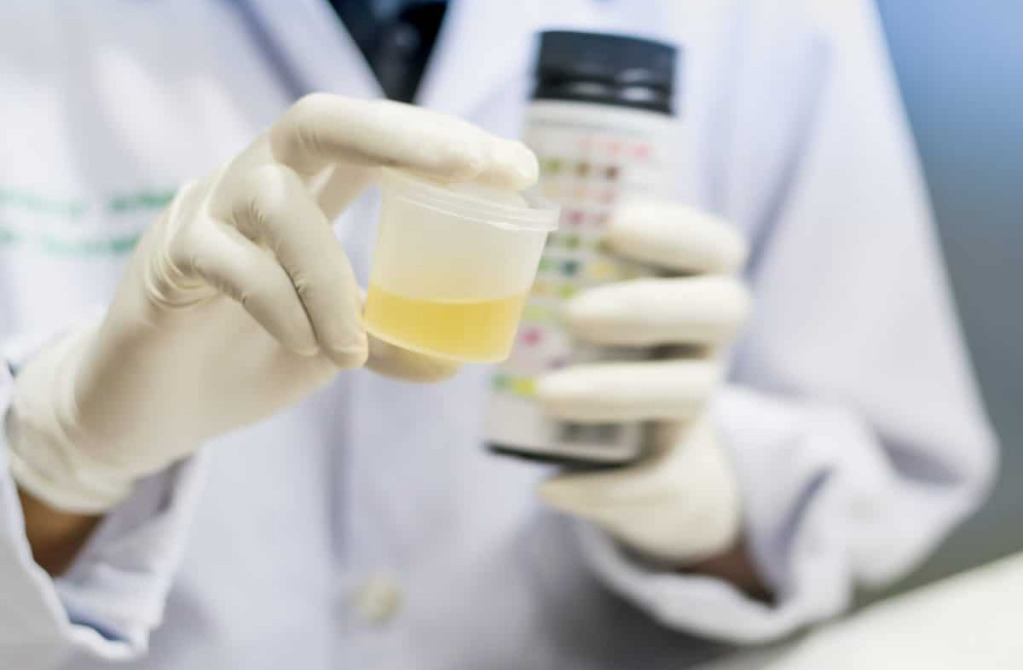
Key Takeaways
Here's the fast answer for skim readers. Notice that panel composition, specimen type, and result interpretation are three separate decisions, not one.- A standard 10-panel usually combines five widely recognized drugs or drug classes (THC, cocaine, amphetamines, opiates, and PCP) with five additional substances that may include benzodiazepines, barbiturates, methadone, and legacy or locally substituted substances (such as propoxyphene or methaqualone).
- Detection windows differ sharply by specimen. Oral fluid captures very recent use, with many drugs detectable within an hour of use and for roughly 5 to 48 hours afterward. Urine commonly detects many drugs for about one to seven days after a single dose, though chronic cannabis use can extend this considerably. Hair can reflect use history for up to about 90 days.
- Initial 10-panel screens are typically immunoassays run at preset cutoff levels. Only non-negative samples should move to confirmatory GC/MS or LC-MS/MS testing.
A non-negative screen is not the same as a failed test. Medical Review Officer (MRO) review and prescription verification can change the final reported result. - DOT drug testing is federally defined around a specific 5-panel and set of process rules, so a non-DOT 10-panel is not a substitute for DOT compliance.
- THC findings are especially easy to overread. According to Quest Diagnostics' 2026 Drug Testing Index, the combined U.S. workforce urine positivity rate was 4.3% in 2025, down from 4.4% in 2024. A positive metabolite result may indicate prior exposure within a detection window rather than on-the-job impairment.
Did You Know: A positive metabolite result can reflect prior exposure within a valid detection window rather than real-time impairment.
What Is a 10-Panel Drug Test Designed to Do?
A 10-panel drug test is a screening tool that checks a biological sample for the presence of ten targeted drugs or drug classes at or above defined cutoff levels. It's designed to tell you whether a sample contains those substances, not to diagnose a substance use disorder and not to prove someone was impaired at any specific moment.
It helps to keep three terms distinct. A "drug test" or "drug screen" looks for the presence of substances or their metabolites in a sample; an "impairment assessment" is a separate process that tries to gauge whether someone is currently under the influence. A 10-panel is firmly in the first category.
Workplace drug testing has long been common among US employers. The practice has evolved, but the core purpose has stayed the same: give employers a consistent, documentable way to screen for targeted substances.
Pro-Tip: Keep your vocabulary clean in policy language. "Drug test," "drug screen," and "impairment assessment" are not interchangeable, and treating them as one thing invites disputes.
Did You Know: The word "panel" refers to the number of categories or substances screened, not a universal, federally fixed lineup for non-DOT employers.
What Makes a Drug Test "10-Panel"
A "panel" is simply the number of categories or substances on the testing menu, so a 10-panel screens for ten. That's the whole logic behind the name. What fills those ten slots, however, depends on the lab's menu and your program design. As workplace testing programs matured, providers developed different standard menus.
Pro-Tip: Define "panel" for your stakeholders before you ever list drug names, so nobody assumes ten means "everything."
What Employers Are Trying to Learn From the Screen
Most employers run a 10-panel for a short list of reasons: policy compliance, workplace safety, hiring consistency, and risk management. The goal is usually to determine whether a sample contains targeted substances above a cutoff, not to diagnose a medical condition or prove misconduct. That framing matters, because it defines what you can and cannot reasonably infer. A screening program tells you about the sample. It does not, on its own, tell you a full story about the person.
Pro-Tip: Keep the lens on what the program can and cannot support before you write any adverse-action language.
How a 10-Panel Differs From Testing for Real-Time Impairment
There's a bright line between detecting a metabolite within a detection window and proving present impairment. A metabolite is a substance the body produces while processing another substance, and metabolites can linger long after any effects have worn off. THC is the clearest example: someone could test positive for THC metabolites days after use with no current impairment whatsoever. Detection timing varies by specimen much more than it proves intoxication, which is exactly why oral fluid may reflect only very recent use while hair can look back roughly 90 days.
Pro-Tip: Use the phrase "detected within a valid window" rather than "impaired" unless you're describing a separate, documented impairment process.
Did You Know: Metabolite detection and real-time intoxication are not the same finding.
What Is Tested for on a 10-Panel Drug Screen?
Here's the direct answer to the question most readers arrive with. A 10-panel screens for ten drugs or drug classes, and the common menu breaks into two clusters: a core five that most people expect, and an additional five that complete the panel. The important caveat is that no single non-DOT lineup is universal across vendors. Providers build their menus based on employer demand, geography, and local drug trends, so you should always confirm the exact analyte list and test code.
Did You Know: Some labs still market a "10-panel" even when one or more legacy drugs have been replaced with newer substances based on employer demand.
The Five Substances Most Readers Expect
These five categories overlap with the widely recognized workplace-testing core, which is why they show up on nearly every 10-panel menu. A 10-panel commonly includes:
Pro-Tip: Use "commonly includes" rather than "always includes" in your policy documents.
Marijuana (THC metabolites)
For urine and hair screens, the test looks for THC metabolites rather than active THC. For oral fluid testing, the target analyte under HHS guidelines is parent THC, which is part of why oral fluid reflects a much shorter detection window. Because cannabis laws differ widely by state, this is the most policy-sensitive substance on the panel, and a positive should never be equated with current impairment. Refer to this blog to learn more about the THC swab test.
Cocaine metabolites
Labs commonly report cocaine metabolites rather than drawing a use-timing conclusion. The screen tells you the metabolite is present above a cutoff, not when the use occurred.
Amphetamines
This category can capture multiple stimulant compounds and often requires confirmation to sort out lawful medications from substances of concern.
Opiates
A standard opiate screen targets a specific class of substances and does not automatically capture every opioid. Panel composition matters here, and broader opioid concerns may call for a custom menu.
PCP
Phencyclidine is a legacy core substance that remains on most 10-panel menus by convention.
Did You Know: THC is often reported as a metabolite rather than proof of active intoxication.
The Additional Substances That May Complete a 10-Panel
After the core five, employers usually see these additional slots, among others. Your list may vary depending on the vendor and menu selected, so always confirm the exact analyte lineup in writing.
Benzodiazepines
A commonly added class when employers want broader visibility into prescription-drug categories.
Barbiturates
Another common added class, especially in older standard menus.
Methadone
Often listed separately rather than assumed under the opiate category.
Propoxyphene or methaqualone in legacy panels
These are legacy examples you may still encounter in older vendor documents. Their continued appearance is a reminder that "standard" menus are not frozen in time.
Lab-specific substitutions employers may encounter
Some labs swap a legacy slot for a newer, locally relevant substance. The key point is menu variability by lab, geography, and employer preference, not any single fixed list.
Pro-Tip: Keep legacy substances in your reference materials because readers still see them in vendor sheets, but confirm whether your provider has substituted anything newer.
Did You Know: "Standard" 10-panels sometimes differ because one provider retains a legacy slot while another swaps it for a newer local-priority drug.
Why the Lineup Is Not Always Identical Across Providers
Because "10-panel" only tells you the count, providers can, and do, market different menus under the same label. There is no single nationally fixed non-DOT lineup. The practical takeaway: verify the exact test code, drug menu, and specimen type with your vendor before you write it into policy.
Pro-Tip: Request the exact analyte lineup and test code in writing before finalizing any policy language.
How Does a 10-Panel Drug Test Work?
Understanding the workflow is what keeps you from confusing a screening hit with a final result. The process moves in sequence: specimen collection, an initial immunoassay screen at preset cutoffs, confirmatory testing for any non-negative sample, and finally reporting after any required review. Specimen choice sits at the front of this workflow and shapes everything downstream, because detection windows generally vary by specimen, from roughly 5 to 48 hours for oral fluid, with detection possible in under an hour, to as long as about 90 days for hair.
Pro-Tip: Require your testing vendor to provide both screening and confirmation cutoff levels, plus the confirmation method names, before the program goes live.
Did You Know: A non-negative screen should not be treated as a final confirmed result until the remaining steps are completed.
Common Specimen Types Employers Can Use
Each specimen answers a slightly different question. Think of this as a decision aid, not a science lecture.
|
Specimen |
Best at capturing |
Typical window |
Practical notes |
|
Urine |
Near-term use for many drugs |
About 1 to 4 days after a single dose for many drugs, though chronic cannabis use can extend this to roughly 30 days |
Common and practical for most employer programs |
|
Oral fluid |
Very recent use |
Roughly 12 to 48 hours |
Useful when recency is the priority |
|
Hair |
Longer-term pattern and history |
Up to about 90 days |
Historical lookback, not recent use |
|
Blood |
Very recent use |
Short |
Least common in routine workplace screening |
Urine is common and practical, with moderate windows for many drugs and longer windows in frequent-use cases. Oral fluid is more useful when your program specifically cares about very recent use. Hair is better suited to longer-term patterns or history than to recent use, and blood focuses on very recent use but is least common in routine workplace screening.
Pro-Tip: Remember that specimen choice changes the question you're answering, not just how you collect the sample.
Did You Know: Hair and urine can both be valid choices, but they answer very different timing questions.
The Difference Between Screening and Confirmatory Testing
This distinction is the one that prevents policy mistakes. The initial screen is an immunoassay run at preset cutoff thresholds, designed for efficient, high-volume screening. Any sample that reads non-negative should move to a more specific confirmatory method, either GC/MS or LC-MS/MS, before it is treated as a positive. An immunoassay is deliberately tuned for sensitivity, so it may flag samples that confirmatory mass spectrometry later clears. That is exactly why you should never collapse screening and confirmation into a single step.
Challenge: Non-negative screens are often overread as failed tests, leading to premature adverse action.
Solution: Require confirmatory GC/MS or LC-MS/MS testing and MRO review before treating any result as a confirmed positive.
Pro-Tip: Spell out "non-negative" and "confirmed positive" as separate outcomes in your policy.
Where Chain of Custody Matters Most
Documented handling protects you at every point: collection, transfer, lab receipt, and any later dispute. Chain of custody records who touched the sample, how it was sealed, and how it moved, which is what supports defensibility if a result is ever challenged. Strong lab science can still be undercut by a sloppy custody trail.
Pro-Tip: Confirm your vendor's chain-of-custody documentation covers collection, transfer, lab receipt, and storage, and that each handoff is time-stamped and signed.
Did You Know: Chain-of-custody gaps can weaken an employer's position even when the lab science is sound.
What Is Detected in a 10-Panel Drug Test, and for How Long?
What's detected is any targeted substance present above the cutoff. How long it stays detectable depends far more on the specimen and the person than on the panel name. The numbers below are approximate and clearly caveated for a reason: they shift with use frequency, metabolism, and formulation.
Pro-Tip: Use ranges and qualifiers such as "often," "commonly," and "approximately" rather than presenting exact windows as guarantees.
Detection Windows by Specimen Type
Detection windows generally vary widely by specimen:
|
Specimen |
Approximate window |
Cannabis-specific note |
|
Oral fluid |
~5 to 48 hours for many drugs |
Cannabis up to about 24 hours in one review |
|
Urine |
About 1 to 4 days after a single dose for many drugs, though chronic cannabis use can extend this to roughly 30 days |
Cannabis approximately 1 to 30 days, depending on use pattern |
|
Hair |
Up to ~90 days |
Cannabis metabolites up to about 90 days |
|
Blood |
Short |
Recent-use focused |
The pattern to remember is that specimen choice affects interpretation more than the panel name does. Oral fluid and blood are best for recent-use capture, while hair offers the longest historical lookback. Urine is often a nearer-term screening tool, while hair reflects a more historical pattern of use.
Factors That Influence How Long Substances Remain Detectable
Detection charts are approximations because several variables move the numbers. For cannabis alone, urine detectability can range from roughly 1 to 30 days depending on use pattern, while hair may reflect up to about 90 days. Frequency of use matters most: chronic cannabis use in particular can extend urine detectability well beyond a single-dose estimate. Body composition and metabolism are one variable among several, and not a precise predictor. Hydration and sample dilution can affect concentrations and tie directly into dilute-result handling later, and drug formulation and dose can influence how long markers stay above cutoff levels.
Pro-Tip: When someone asks "how long does it stay in the system," remember that use frequency often matters more than the panel name.
Why Detection Time Should Never Be Confused With Current Impairment
A detection window is not an impairment window. According to the Mayo Clinic Proceedings (2017), "Clinical Interpretation of Urine Drug Tests," and Quest Diagnostics' 2026 Drug Testing Index, cannabis metabolites can remain detectable in urine for roughly 1 to 30 days and in hair for up to about 90 days, so a positive can reflect use days or weeks earlier with no bearing on someone's condition at the moment of testing. Treating detection as proof of on-the-job impairment is one of the most common and costly interpretation errors employers make.
Pro-Tip: Keep the phrase "the detection window is not an impairment window" in your training materials.
Did You Know: A person can test positive within a detection window without being actively impaired at the time of testing.
When Does a 10-Panel Test Make Sense?
Now the practical question: is a 10-panel even the right tool for your workforce? Broader panels are often considered when employers want additional prescription-drug visibility or more coverage than a basic menu provides. Broader is not automatically better. The right choice matches the role.
Pro-Tip: Match panel choice to job family, safety sensitivity, geography, and local drug trends instead of applying one blanket panel to every role.
Scenarios Where Employers Commonly Choose a 10-Panel
Broader coverage tends to come up in higher-risk settings where employers want more visibility than a narrower menu provides. For pre-employment screening, a broader baseline screen is common for higher-risk roles where safety or prescription-drug visibility is a priority. For random testing, ongoing programs may use broader panels where policy and role risk justify it. For post-accident testing, employers may want a wider screen after an incident, while avoiding any claim that the result alone proves causation or impairment. Reasonable-suspicion testing is usually policy-driven and best aligned with trained observation and clear documentation.
Pro-Tip: Tie each scenario to a specific policy purpose: safety, consistency, or defensibility.
Did You Know: The same employer may reasonably use different panels for different job families.
10-Panel vs. 5-Panel vs. DOT-Regulated Testing
|
Type |
Scope |
Common use case |
Regulatory structure |
|
5-panel |
Five core drug classes |
Most private and government employers |
Widely used standard |
|
10-panel |
Ten drugs or classes |
Safety-sensitive, broader prescription visibility |
Employer-defined, non-DOT |
|
DOT |
Federally defined 5-panel plus process rules |
DOT-regulated positions |
Specific federal requirements |
Many employer programs use a 5-panel, while a 10-panel is often chosen when broader coverage is needed. Critically, a non-DOT 10-panel is not a substitute for DOT compliance, because DOT is defined by both its panel and its process rules.
When a Custom Panel Is a Better Fit
Sometimes a labeled "standard" panel misses your actual concern. Geography, role risk, prescription-drug categories, and local drug trends may point toward a custom menu that better matches your objective. A customized panel built for a specific role can be more defensible than a generic one that happens to carry the "10-panel" label.
Pro-Tip: Match the panel to role risk, regulatory requirements, and local drug trends instead of defaulting to the same panel for every job family.
How Do You Interpret Results Without Overreading Them?
Result language is where many disputes originate. Quest Diagnostics' 2026 Drug Testing Index, based on more than 8 million workplace urine drug tests, reports an overall positivity rate of 4.3% in 2025, down from 4.4% in 2024. Confirmed positives are the minority outcome, which is exactly why you should build policy around confirmed results rather than screening hits.
Pro-Tip: Build policy language around "confirmed positive" outcomes, not just screening hits, to reduce compliance and candidate-experience issues.
Did You Know: Fewer than one in twenty workplace urine drug tests returned a confirmed positive result in Quest's 2025 dataset.
Negative vs. Non-Negative vs. Confirmed Positive
A negative result means no targeted substance was found above the cutoff. A non-negative result is an interim screen status that means a substance may be present and confirmation is needed; it is not a final adjudication. A confirmed positive is a non-negative that has been verified by confirmatory testing and, where relevant, reviewed. Given Quest Diagnostics' 4.3% confirmed positivity rate in 2025, fewer than one in twenty tests reached that final status.
Pro-Tip: If you use the phrase "screening hit," immediately explain that it is not yet a confirmed positive.
Inconclusive, Invalid, and Dilute Results
Your policy should specify next steps for these outcomes before any result arrives.
- Dilute: The sample was more diluted than expected; policy should define whether a retest is required.
- Invalid: The sample could not be tested reliably and typically calls for a recollection.
- Inconclusive: The result did not resolve cleanly and needs a defined follow-up path.
Pro-Tip: Write retest procedures into your policy so no one improvises under pressure.
How Prescriptions and MRO Review Affect Final Interpretation
Lawful prescriptions can change how a non-negative screen is ultimately reported. That's the role of the Medical Review Officer, a licensed physician who reviews non-negative results and, where a legitimate medical explanation exists, may report the result differently. The employer-facing point is straightforward: the result you act on should be the final reportable result after MRO review, not the raw screen. With confirmed positives being a minority outcome overall in Quest Diagnostics' data, this review step protects both fairness and defensibility.
Pro-Tip: In policy language, separate "screening result received" from "final reportable result after MRO review."
What Employers Should Document Before Taking Action
Before any adverse decision, make sure you have: the policy basis, the job category, the specimen type, the chain-of-custody record, the confirmation status, the MRO review outcome, and your retest rules. That record is what supports consistency and defensibility if the result is ever challenged.
Did You Know: Documentation gaps often create bigger employer problems than the initial screening result itself.
Which Compliance Questions Should Employers Settle First?
A repeatable program depends on decisions you make before the first sample is collected. The goal is multi-state consistency, clear privacy practices, defined safety-sensitive roles, and the records you'll need if a result is disputed.
Multi-State Cannabis Laws and Policy Consistency
THC policy needs location-aware rules and clear escalation paths. Don't assume every state gives an employer the same testing rights, and build in a review step with counsel or compliance leads for each jurisdiction.
Consent, Notice, and Privacy Expectations
Consider whether your program provides clear notice and obtains consent consistent with applicable law, and handle results with appropriate privacy. Consistency of notice can matter as much as the testing rule itself.
FCRA and ADA Considerations
Depending on how testing is arranged, adverse decisions based on results may implicate FCRA disclosure, authorization, and adverse-action requirements, and lawful-prescription situations can raise ADA considerations. Confirm these obligations with qualified counsel.
Role-Based Testing Standards for Safety-Sensitive Positions
Let role risk drive your standards rather than a single companywide rule. Broader panels often prompt the most discussion in safety-sensitive roles, so define "safety-sensitive" in writing before you order one.
Recordkeeping and Defensibility if Results Are Challenged
Retain your policy version, the notices provided, the chain-of-custody record, the final reportable result, and your adjudication notes. A well-documented decision often depends on records that live outside the lab report.
What Are the Common Myths About 10-Panel Drug Testing?
Most confusion comes from collapsing panel breadth, specimen choice, and result interpretation into one idea. Here are the myths worth clearing away.
"A 10-panel test checks for every drug someone could use"
It covers only the ten categories on that specific menu. A custom panel may be needed when the standard menu misses your real concern.
"All 10-panel tests use the same drug lineup"
Providers market different menus under the same label. Legacy substitutions are a common reason two "10-panels" differ, so check the test code and analyte list.
"A positive result proves someone was impaired on the job"
Detection is not proof of impairment. Cannabis metabolites can persist in urine for roughly 1 to 30 days and in hair up to about 90 days, so a valid positive can say little about exact use timing.
"Urine is always the best specimen for every use case"
The best specimen depends on the question you want answered: recent use, historical pattern, or operational practicality. Oral fluid captures roughly 5 to 48 hours while hair looks back up to about 90 days.
Actionable Steps for HR Professionals
- Confirm the exact panel lineup and test code. Ask your provider for the precise analyte list, specimen type, and test code in writing. Never assume that "10-panel" means the same thing across two vendors.
- Get cutoff and confirmation details before go-live. Require both screening and confirmation cutoff levels, plus the confirmation method names (GC/MS or LC-MS/MS), so a non-negative screen never gets mistaken for a final result.
- Match the specimen to the question you're asking. Choose oral fluid for recent use, urine for near-term screening, and hair for historical pattern. Document why you chose each one for each role.
- Write policy around confirmed, MRO-reviewed results. Separate "screening result received" from "final reportable result," and define your steps for dilute, invalid, and inconclusive outcomes before any result arrives.
- Build location-aware cannabis rules. Review THC policy jurisdiction by jurisdiction with counsel or compliance leads, and create clear escalation paths rather than assuming one national rule.
- Define safety-sensitive roles in writing. Let role risk drive whether you use a 5-panel, a 10-panel, a custom menu, or DOT-mandated testing, and keep the definitions documented.
- Keep a complete, auditable record. Retain the policy version, notices, chain of custody, confirmation status, MRO outcome, and adjudication notes for every decision that could be challenged.
The AccuSourceHR Advantage
Most employer disputes trace back to workflow inconsistency, not to the basic concept of the 10-panel drug test. When ordering, status tracking, result routing, and documentation are standardized, you apply the same policy logic every time, from test order through final decision. That's where the real defensibility comes from, and it's where a steady screening partner makes the biggest difference.
AccuSourceHR helps HR teams build consistent, defensible drug-screening workflows with clear published test menus, named confirmation methods, a defined MRO process, and multi-state support. As a PBSA-accredited and SOC 2-compliant provider with US-based support, AccuSourceHR gives your team a partner focused on clarity and consistency, so you can apply the same policy logic to every candidate and role with confidence. Share your experience with our team, or request an AccuSourceHR demo of our drug screening solutions to continue the conversation.