
13 min read
THC Swab Test in 2026: How It Works, Detection Times, and Employer Considerations
 Jon Daniel
:
Aug 31, 2026, 12:17:45 PM
Jon Daniel
:
Aug 31, 2026, 12:17:45 PM
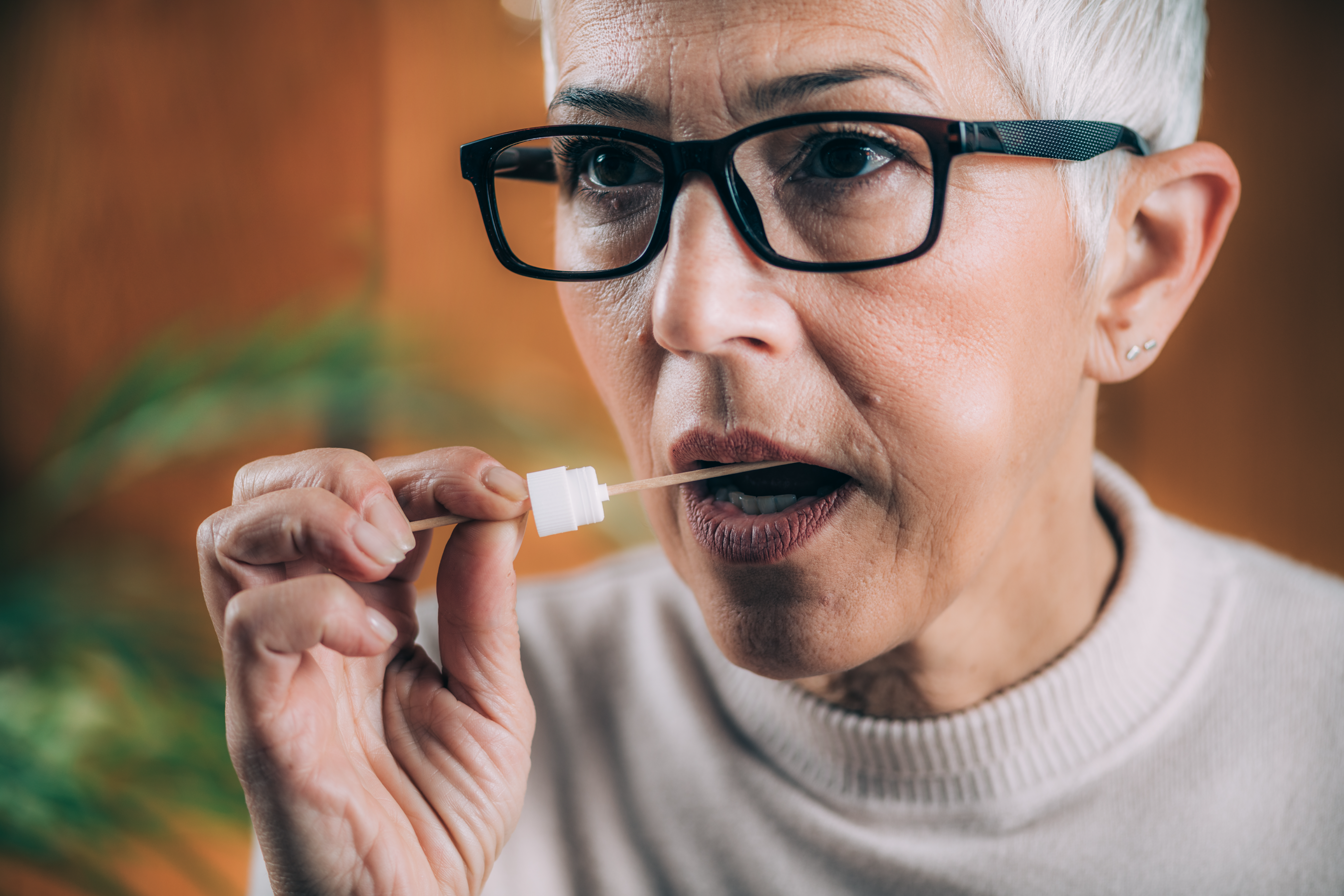
If you're an HR or safety leader in 2026, you've probably noticed the same thing your candidates have: cannabis testing now lives in a legal gray zone. A THC swab test, the oral-fluid screen many employers now use, sits right at the center of that confusion. More states have legalized recreational or medical marijuana, more workers are asking what a positive result actually means, and the advice floating around online still blurs three very different things: detection, impairment, and job risk.
A worker reads that a swab test" only catches you if you used today," while a manager reads that a non-negative "proves someone was high on the floor." Both are oversimplifications, and both can lead to bad decisions.
Disclaimer: This content is provided for informational purposes only and should not be construed as legal advice. Employers should consult qualified counsel for their specific situation.
This guide cuts through that noise. We'll explain how a THC swab test works, what realistic detection windows look like, where accuracy limits show up, and how employers should respond to a non-negative result without overreaching.
Key Takeaways
Here's the short version for scanners, decision-makers, and anyone who just wants the answer first.
A THC Swab Test Is an Oral Fluid Test Designed to Detect Recent Cannabis Exposure
Oral-fluid THC testing is primarily a recent-use screen with a much shorter detection window than urine or hair.
Detection Windows Are Usually Shorter Than Urine or Hair, but They Vary by Use Pattern and Timing
Published windows vary because cutoffs, device design, and time since last use all change how long THC stays detectable.
A Non-Negative Mouth Swab Result Does Not Automatically Prove On-the-Job Impairment
A non-negative oral-fluid result indicates the presence of THC above a reporting threshold. It does not, by itself, establish dose consumed, unsafe behavior, or a measured level of impairment.
Employers Need Policy, Confirmation, and State-Law Awareness Before Relying on Swab Testing
Device performance can vary, which is exactly why confirmation, documentation, and state-law review matter before any employment action.
What a THC Swab Test Is and What It Can and Cannot Tell You
A swab test for THC is an oral-fluid test that checks a saliva sample for THC, or its related compounds, above a defined reporting threshold. Unlike methods built for long historical reach, this one is categorized as a recent-exposure tool. Cannabis tends to be detectable in oral fluid for a much shorter period than urine or hair testing.
| Did You Know? Oral-fluid testing is often preferred when employers prioritize recent-use visibility over the long history captured by urine or hair. |
What a Swab Test for THC Actually Measures
The test analyzes oral fluid for THC or related analytes and compares what it finds against a cutoff. In plain English, a cutoff is the threshold a device or lab uses to decide whether a result is called negative or non-negative. The important nuance: the test is measuring the presence of a substance in a saliva sample, not directly measuring a blood concentration and certainly not measuring performance. This is why oral-fluid testing falls into a different category than hair testing, which captures a far longer history.
Why Oral Fluid Testing Is Often Used to Identify Recent Use
Employers often favor a mouth swab test for THC when timing matters more than history. Consider a reasonable-suspicion or post-incident scenario: a supervisor observes something concerning, and the question is recent exposure close to that event, not whether someone used cannabis three weeks ago. Because oral fluid generally reflects a shorter window than methods designed to look further back, it aligns better with that near-term question. The shorter window is a feature here, not a weakness.
What a THC Swab Test Cannot Prove on Its Own
Here's the differentiation point most online guides skip. A THC swab test cannot, by itself, prove impairment, the exact dose someone consumed, or whether any observed behavior was caused by cannabis. A detectable result can extend beyond the period of peak effects, so presence above a threshold does not map cleanly onto a real-time impairment conclusion.
For an employer, that means a non-negative result is a reason to follow your workflow, not a finished verdict. For a candidate or employee, it means a non-negative doesn't necessarily describe how you felt or performed at any specific moment.
Detection vs. Impairment: Nuance and Impact
Nuance: Detection means finding THC above a reporting threshold. Impairment is a functional question about behavior, safety, and performance. A swab test answers the first question; it does not resolve the second on its own.
Impact: Because the test cannot bridge that gap, observed conduct and documented policy procedures must carry the weight alongside any result. Skipping that step is where employer decisions go wrong.
Presence vs. Dose Consumed
A non-negative result also doesn't tell you how much cannabis was used, exactly when it was consumed, or how strongly it affected the person. Two people can both test non-negative in oral fluid without having used the same amount or having been equally affected.
How a Mouth Swab Test for THC Works From Collection to Result
The full path runs from sample collection, through a preliminary screen, to lab confirmation when policy requires it. Understanding each stage is how employers build a workflow that holds up later. Turnaround varies by device, workflow, shipping, and whether lab confirmation is required.
|
Pro-Tip
Keep three terms distinct in your policy and your conversations: "rapid screen," "non-negative," and "confirmed positive." Treating them as interchangeable is where most employer disputes start.
|
How the Sample Is Collected
A typical collection follows a clear sequence:
- Verify identity. The collector confirms who is being tested and records the relevant details.
- Place the swab. An absorbent pad or swab is placed in the mouth.
- Saturate the sample. The donor keeps the device in place until enough oral fluid is collected; an inadequate sample can cause delays or require recollection.
- Hand off the specimen. The sample is sealed and documented for screening or shipment.
Collection quality matters because a poor sample creates avoidable problems. Fast on-site negatives are part of why oral-fluid collection is so often paired with rapid screening.
| Did You Know? Oral-fluid collection is often simpler than urine collection because it can be observed directly, with less privacy intrusion than restroom monitoring. |
Collection Devices
The device is generally an absorbent pad or swab placed against the inside of the mouth until it draws enough fluid. The point is sample adequacy, not any particular brand.
Observed vs. Non-Observed Collection
Observed collection is often favored because it supports chain-of-custody integrity and reduces concerns about tampering. The trade-off is privacy, so observation should still respect clear boundaries and policy limits.
What Happens During Initial Screening
The first result is usually a rapid immunoassay-style screen or analyzer output that classifies the sample as negative or non-negative. On some portable systems, a negative can come back quickly. When your policy requires confirmation, this preliminary result remains exactly that: preliminary. A fast on-site non-negative should not be labeled a "positive" unless your policy and lab process clearly support that term.
When a Non-Negative Goes to Confirmatory Lab Testing
If a sample screens non-negative and the policy calls for confirmation, the escalation path is straightforward: preserve the specimen, document the chain of custody, and send it for confirmatory analysis, such as GC-MS or LC-MS/MS, where applicable. In regulated programs, oral-fluid confirmation generally applies defined SAMHSA or DOT cutoffs. A confirmed positive can take longer due to the additional confirmation step. This is the single most important distinction to get right: a non-negative screen and a confirmed positive are not the same thing, and treating them as identical is where workplace disputes can begin.
How Long Results Usually Take
Here's a realistic timeline so you can answer the "when will I know?" question without overpromising:
- Rapid on-site negative: may be available quickly, sometimes the same day
- Lab-based negative: often returned after the specimen is processed by the lab
- Confirmed positive: typically takes longer because confirmatory testing adds steps
Keep in mind that collection logistics, shipping, and weekend timing can extend real-world turnaround times.
Rapid On-Site Screening Timelines
The portable analyzer is built for speed and immediate triage. That fast on-site reporting is genuinely useful, but it's also usually the least final result in the workflow.
Lab-Confirmed Turnaround Times
Confirmatory testing takes longer because it's designed to be more defensible, not merely slower. That added rigor is the whole point when an employment decision is on the line.
How Long Can a Mouth Swab Test Detect THC?
This is the core question, and the honest answer is a range, not a single number. Published guidance and research describe oral-fluid detection as a shorter, recent-use window than urine or hair. The variation between sources is not necessarily a contradiction; it reflects different devices, cutoffs, and study methods.
|
Pro-Tip
Present detection times as ranges shaped by cutoffs and timing. Expect ranges, not guarantees.
|
Typical THC Mouth Swab Test Detection Window by Use Pattern
Breaking the answer down by use pattern helps, as long as we avoid false precision.
-
Occasional Use
Occasional users generally fall below detectable oral-fluid levels sooner. Even so, occasional use does not automatically mean someone will be undetectable within a few hours.
-
Regular Use
Regular use sits in the middle. Repeated exposure may extend detectability somewhat, with the actual window shaped heavily by timing since last use and the cutoff applied.
-
Frequent or Heavy Use
Frequent users may remain detectable longer than occasional users. But the research doesn't support guaranteeing a specific maximum number of hours or days, and the gap between frequent and occasional users can be smaller than people assume.
Factors That Change the Mouth Swab Test for THC Detection Window
The THC mouth swab test detection window shifts based on several variables, which is why one person's experience may not match another's.
- Time since last use: The most intuitive and operationally important factor. The longer the gap between use and collection, the lower the likelihood of detection.
- Smoking or vaping vs. edibles: Route of use changes oral contamination patterns, which can change how oral fluid behaves on a test.
- Product potency and frequency: Stronger products and repeated use can prolong detectability, though precise figures aren't well supported.
- Individual oral-fluid variability: Biological differences and collection conditions introduce natural variation.
- Assay cutoff: The reporting threshold alone can move results. Threshold choice can materially change the reported detection window.
Why Published Detection Windows Vary So Much
If you've found conflicting numbers online, here's why: studies and labs use different devices, collection protocols, target analytes, and reporting thresholds. Different sources are often measuring under different assumptions. Two sources can publish different windows, and each describes its own testing parameters.
What Affects THC Swab Test Accuracy and False Results
Oral-fluid testing can be useful, but device performance, collection conditions, and cutoffs all affect the result. Performance can vary meaningfully from one screening approach to another. In plain English, sensitivity is how well a test catches true users, and specificity is how well it avoids flagging non-users. That variability tells you false negatives are a real concern with some point-of-collection cannabis screens.
Cutoff Levels and Why They Matter
The cutoff is the reporting threshold that determines whether a result is called negative or non-negative. A lower cutoff can extend the apparent detection window; a higher cutoff can shorten it. That's why the same person could test differently under different cutoff rules; there is no single universal standard across all devices or workflows.
Common Reasons Results May Be Challenged
Disputes tend to cluster around a few operational weak points. Framing these as process questions, not as evidence that oral-fluid testing is useless, keeps the conversation honest. That is why method differences matter in practice.
-
Collection Timing
Waiting longer after use can materially change detectability in oral fluid, so timing affects whether a true exposure is captured at all.
-
Sample Quality
Insufficient or poorly collected oral fluid can produce questionable results or require recollection.
-
Device Sensitivity Differences
Different screening devices don't perform identically and shouldn't be treated as interchangeable.
False Positives, False Negatives, and Inconclusive Results
These error types are distinct. A false positive flags someone who didn't use; a false negative misses someone who did; an inconclusive result reflects collection or device limitations. A screen set with a higher cutoff is generally more likely to miss low-level exposure than to flag a non-user, though device performance varies.
Why Confirmatory Testing Matters Before Employment Action
Because rapid screens can misclassify or miss cases, confirmation before final action, whenever policy and law require it, is where science, fairness, and defensibility meet. A rapid result can be operationally useful for triage while still being insufficient as the sole basis for a final employment decision.
When Employers Choose a Mouth Swab THC Test Instead of Urine, Hair, or Blood
The right method depends on the decision you're trying to support, not on a single universal ranking. Oral fluid is often used when recent-use visibility matters more, while urine and hair are typically chosen when a longer detection window is the goal.
|
Did You Know?
Hair testing may reveal longer-term patterns, but oral-fluid testing is typically selected when the goal is to assess more immediate, near-term exposure.
|
Best-Fit Use Cases for a Mouth Swab THC Test
A mouth swab THC test shines when recent-use visibility and easier observation matter most. Because saliva testing is designed for near-term detection, employers often favor it in the following scenarios.
-
Reasonable Suspicion Testing
When a supervisor documents concerning observations, oral fluid offers near-term exposure information collected close to the event.
-
Post-Incident Screening
Fast collection and a shorter window are appealing when timing around an incident is what matters.
-
Roles Where Recent-Use Visibility Matters
In safety-sensitive operational settings, recent-use visibility is often the priority, while remembering that oral fluid alone does not prove impairment.
When Urine May Be a Better Fit
Urine may be the better fit when an employer wants a longer retrospective window and an established, familiar workflow. This isn't about one method being better overall; a longer window simply serves some program goals better than others.
When Hair or Blood May Be a Better Fit
Hair testing is a long-history screening, which is precisely why some employers avoid it when they only care about near-term exposure. Blood is a more invasive method usually discussed in evidentiary or clinical contexts. Blood and oral fluid are not interchangeable, even when both come up in recent-use conversations.
A Practical Decision Framework for Test Selection
- Define the decision you're trying to support: recent-use visibility, broader history, or immediate incident response.
- Match the detection window to that decision, using oral fluid's shorter window or urine's and hair's longer ones as appropriate.
- Confirm the legal and policy rules before finalizing. Fit matters more than assumptions.
The most defensible program is usually the one with the clearest rationale, not the most aggressive method.
Employer Considerations Before Adding THC Swab Testing to Policy
A testing method is only as defensible as the policy, documentation, and review process around it. Given the performance and process limits discussed above, confirmation and procedural safeguards aren't optional niceties; they're what protects both the worker and the organization.
| Pro-Tip Define safety-sensitive roles in writing, and route every non-negative through a state-law and policy review before any discipline. |
State Marijuana Laws and Off-Duty Conduct Protections
Cannabis rules are state-specific and changing quickly. Before acting on any result, check how off-duty conduct protections, medical-use rules, and adverse-action limits apply in each jurisdiction where you operate. Because rapid screens have limitations, many employers treat a state-law review as a required step, not an afterthought.
Safety-Sensitive Roles vs. General Workforce Roles
Define in writing which roles justify recent-use screening, then apply the rules consistently. Oral fluid's shorter detection window may align well with certain safety-sensitive contexts, but the same test can be harder to defend in a role with no safety nexus.
Consent, Privacy, and Collection Protocol
Cover notice, consent language, privacy expectations, and consistent collection rules. Fast on-site screening can make oral-fluid collection efficient, but efficiency is no reason to skip procedural safeguards. The cleaner the protocol, the fewer post-test disputes.
Chain of Custody and Documentation Standards
Document the essentials at every step:
- Who collected the sample and when
- Which device was used
- Chain of custody from collection to result
- Result classification (negative, non-negative, confirmed positive)
- Confirmation status
- The policy basis for any next step
Because confirmation can take longer than a rapid screen, your documentation has to bridge the gap between the rapid screen and the final report. Documentation should explain the process, not just the outcome.
Supervisor and HR Training Requirements
Managers need training on reasonable-suspicion observations, result terminology, escalation, and state-law review. No manager should treat a rapid screen as an all-knowing tool, and no manager should ever say "the test proves impairment."
What Employees and Candidates Should Expect on Test Day
If you're the one being tested, knowing the process lowers the anxiety. Some programs can return an on-site negative quickly, while lab follow-up takes longer when confirmation is needed. This section is about what actually happens, not about "beating" the test.
How to Prepare for a Swab Test for THC
- Follow the collection instructions the collector gives you.
- Disclose what your employer's policy requests, including any medications or relevant information the policy asks for.
- Be skeptical of rinse-based "fixes." Internet hacks promising to defeat the test are not reliable, and a rapid result doesn't always mean the case is closed.
Fast on-site results are one reason test-day timing matters operationally, but your focus should be on a clean sample and following process.
What Happens During the Collection Process
The collector verifies your identity, places a swab in your mouth, and holds it until enough oral fluid is collected, following the same sequence detailed earlier in the workflow section. From there, the result is screened on-site or the specimen is sent for lab analysis under policy, and incomplete collection can trigger delays or a recollection.
What Happens After a Non-Negative Result
A non-negative is often an interim status, not the final answer. Depending on the program and policy, next steps may include:
- Confirmatory lab review before a final determination
- Temporary duty decisions made strictly under written policy
- Consistent communication about timing and status
Because lab review takes longer than an on-site screen, expect a gap between the rapid screen and the final outcome. Any employer action during that window should follow written policy, not improvisation.
Confirmatory Review
A lab review may be required before a final determination is made, especially when policy or law calls for it.
Retest or Recollection Scenarios
Some programs allow for recollection or further review when sample quality or process issues arise.
Communication and Next Steps
Timing, reporting, and any work-status decisions should be communicated consistently under policy, so no one is left guessing.
Common Myths About the THC Swab Test
Most persistent myths come from confusing oral-fluid testing with either urine testing or impairment testing. Here's the evidence-based reality.
-
"A Mouthwash or Rinse Can Reliably Beat the Test"
Device performance does vary across screens, but that variability is not evidence that a rinse reliably defeats testing. Collection timing, device design, and confirmation procedures matter far more than any internet hack. A test's limitations are not the same thing as a dependable way to beat it.
-
"A Positive Oral Swab Means the Employee Was Impaired at Work"
This is the most important misconception for employers to avoid. A non-negative result can persist beyond the period of peak effects. A non-negative result does not establish impairment on its own.
-
"All Cannabis Products Create the Same Oral-Fluid Testing Pattern"
Route of use, potency, and timing can all change oral-fluid results. Oral-fluid detection is generally short-term but variable, so smoking, vaping, and edibles shouldn't be described as identical. Oral contamination patterns can differ from broader body-exposure patterns.
-
"Oral Fluid Testing Is Always Less Reliable Than Other Methods"
The truth is in the middle. Oral-fluid testing is neither perfect nor useless. It has valid use cases, and the key is fit and confirmation, not blanket dismissal.
Actionable Steps for HR Professionals
Building a defensible THC screening program in 2026 takes more than picking a device. Workflow discipline matters as much as method choice.
- Define where oral fluid fits in your broader screening strategy. Decide first whether you're screening for recent-use visibility, broader history, or immediate incident response. Oral fluid's shorter window versus longer urine and hair windows should drive role-based method selection. If the policy question is unclear, the method will feel arbitrary.
- Standardize rapid screen, confirmation, and escalation steps. Lay out the sequence: collect, screen, classify as negative or non-negative, confirm when required, then review before action. Build it around a realistic timeline; on-site screening may be fast, while lab negatives and confirmed positives take longer when confirmation is required. Make sure your written policy uses the same result labels your vendor and lab use.
- Document role-based rules and jurisdiction-specific exceptions. Spell out who is tested, under what trigger, what happens after a non-negative, and which state-law exceptions require special handling. Given the accuracy and process limitations already discussed, written review criteria should be in place before any adverse action is taken. Policy should name the decision authority rather than leaving it to ad hoc manager judgment.
- Train supervisors and HR on terminology and escalation. Teach managers the difference between a non-negative and a confirmed positive, what reasonable-suspicion documentation looks like, and the rule that a screen never "proves impairment." Training often prevents bigger problems than swapping out a device.
- Route every non-negative through state-law and policy review. Cannabis-friendly state rules can change how you may use even an otherwise valid result. Many employers treat the legal review as a required step before discipline, not optional.
- Evaluate screening partners on the full workflow, not just the test. Look for consistent oral-fluid collection, clear result categories, confirmatory pathways, documentation support, and multi-state compliance coordination. Partner quality directly affects real-world outcomes. Choose a partner that can explain the post-test workflow, not just the device.
The AccuSourceHR Advantage
A THC swab test is best understood as a recent-use screening tool, not a standalone proof of impairment. The programs that hold up are the ones where the test sits inside a clear policy, with documented chain of custody, defined role rules, and a confirmation step before any decision. That's exactly the kind of program we help employers build. As a PBSA-accredited screening provider with FCRA-trained, US-based specialists, AccuSourceHR helps you align oral-fluid testing with confirmation pathways and multi-state compliance review, so a rapid result never becomes a rushed decision.
How is your team handling THC testing as state laws keep shifting? We're glad to talk through what's been hardest in your program. Reach out to discuss your screening workflow or request an AccuSourceHR drug screening demo, and let's build a program that holds up.