
7 min read
Workplace Drug Testing: Employer Guide & Laws | AccuSourceHR
 Jon Daniel
:
Jan 3, 2024, 2:58:54 PM
Jon Daniel
:
Jan 3, 2024, 2:58:54 PM
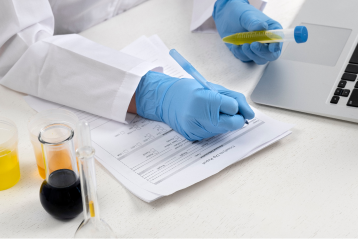
Workplace drug testing is the process employers use to screen job applicants and current employees for the presence of drugs or alcohol, helping maintain a safe, productive, and legally compliant work environment. For HR teams and compliance managers, a well-designed testing program reduces liability, supports safety-sensitive operations, and protects your organization from costly incidents. This guide explains the main types of drug tests, when and why employers test, the federal and state compliance landscape , including major new cannabis laws in California and Washington effective January 1, 2024 , and how to build a defensible testing program.
What Is Workplace Drug Testing?
Workplace drug testing analyzes a biological specimen , typically urine, oral fluid, hair, or blood , to detect drugs, drug metabolites, or alcohol. Employers use it to inform hiring decisions, enforce a drug-free workplace policy, and comply with federal and industry regulations. Testing is common across manufacturing, transportation, healthcare, construction, and government contracting, where impairment carries a heightened safety risk.
A compliant program does more than collect samples. It defines who is tested and when, uses laboratory-certified methods and consistent cut-off levels, protects applicant and employee privacy, and routes non-negative results through a Medical Review Officer (MRO) for verification. Because drug testing sits at the intersection of employment law, privacy law, and , increasingly , state cannabis legislation, the rules vary significantly by state and by industry. Getting the framework right is essential to keeping your program both effective and legally sound.
Types of Drug Tests and Specimen Types
Choosing the right specimen type is one of the most important decisions in your program, because each method offers a different detection window and operational profile.
Urine Testing
The most widely used method, particularly for federally regulated (DOT) programs. Urine testing detects recent-to-moderate drug use , generally a few days for most substances , and is inexpensive, well-validated, and lab-supported. It primarily detects metabolites, meaning a positive result reflects prior use rather than current impairment.
Oral Fluid (Saliva) Testing
Oral fluid testing detects recent use and is increasingly favored because collections are observed, hard to adulterate, and can be done on-site. Critically, oral fluid can be configured to detect active THC , an indicator of recent cannabis use, rather than lingering non-psychoactive metabolites. This makes it especially relevant under new state cannabis laws.
Hair Testing
Hair testing offers the longest detection window , up to roughly 90 days , making it useful for establishing patterns of repeated use. It is not designed to detect very recent use or current impairment.
Blood and Breath Testing
Blood testing is highly accurate and can indicate current impairment but is invasive and typically reserved for specific post-accident or clinical scenarios. Breath testing is the standard for alcohol.
Reasons and Scenarios for Drug Testing
Employers test at different points in the employment lifecycle, and each scenario carries its own legal and policy considerations.
- Pre-employment testing: Conducted after a conditional offer to screen new hires. This is the most common testing trigger , and the one most affected by recent cannabis legislation.
- Random testing: Unannounced testing of a randomly selected pool of employees, common in DOT-regulated and safety-sensitive roles to deter ongoing use.
- Reasonable suspicion testing: Triggered when trained supervisors observe documented signs of impairment, such as slurred speech, erratic behavior, or the smell of a substance.
- Post-accident testing: Conducted after a workplace incident or injury to determine whether drugs or alcohol were a contributing factor.
- Return-to-duty and follow-up testing: Required after an employee violates a policy or completes a substance abuse program before resuming safety-sensitive duties.
- Periodic testing: Scheduled testing tied to certifications, medical exams, or industry requirements.
Defining these scenarios clearly in your written policy , and applying them consistently , is essential to avoiding discrimination claims.
The Legal and Compliance Framework
Workplace drug testing is governed by a layered mix of federal and state law, and employers must navigate both.
Federal regulations apply to safety-sensitive industries. The U.S. Department of Transportation (DOT) mandates specific testing procedures for regulated employees, and federal contractors and grantees are subject to Drug-Free Workplace Act requirements. Federal background investigations and security clearances also carry their own testing obligations.
OSHA guidance cautions against blanket post-accident testing policies that could discourage injury reporting, so post-accident testing should be tied to a reasonable likelihood that substance use contributed to the incident.
The ADA protects individuals in recovery and limits inquiries into lawfully prescribed medications, though current illegal drug use is not protected.
State law is where variation is greatest , and where the landscape is changing fastest. A growing number of states restrict how and when employers can test for cannabis, protecting off-duty legal use while preserving employers' rights to maintain a drug-free workplace and test for impairment. Because requirements differ sharply by jurisdiction, multi-state employers should map their obligations state by state. AccuSourceHR maintains an interactive state marijuana legislation map to help employers evaluate state-specific requirements.
Cannabis and the National Legalization Trend
The most significant shift in workplace drug testing over the past decade has been the rapid expansion of state cannabis legalization. As recreational and medical use has spread, a disconnect has emerged: many drug tests detect non-psychoactive cannabis metabolites that can linger for up to 30 days and have no correlation to on-the-job impairment.
In response, states are moving to protect lawful off-duty cannabis use while allowing employers to test for active impairment. This trend , visible in California, Washington, New York, New Jersey, Nevada, and beyond , is reshaping pre-employment testing nationwide. Two of the most consequential laws took effect January 1, 2024, in California and Washington.
Washington: Senate Bill 5123
Signed May 9, 2023, SB 5123 makes it unlawful to base initial hiring decisions on the presence of non-psychoactive cannabis metabolites or on an applicant's lawful off-duty cannabis use. Employers may still conduct scientifically valid pre-employment screening that does not test for those metabolites. The law preserves employers' rights to maintain a drug- and alcohol-free workplace and to conduct post-accident and reasonable-suspicion testing.
Key exceptions include positions requiring a federal background investigation or security clearance; law enforcement, fire, first responder, and corrections roles; airline and aerospace positions; safety-sensitive roles where impairment presents a substantial risk of death (which must be identified before application); and any testing required by federal law, funding, licensing, or contract. Read the full text of SB 5123.
California: SB 700 and AB 2188
AB 2188 was signed September 18, 2022, and SB 700 on October 7, 2023; together they established and amended Section 12954 of the Government Code, and both took effect January 1, 2024.
- AB 2188, prohibits discrimination against a person in hiring, termination, or any term of employment based on off-duty cannabis use or on a drug test detecting non-psychoactive cannabis metabolites. Employers may still use scientifically valid screening methods that don't detect those metabolites, and the building and construction trades are exempt.
- SB 700, makes it unlawful to ask about, or discriminate based on, an applicant's prior cannabis use , including information obtained from criminal history , except where state or federal law permits.
Both laws preserve employers' rights to a drug-free workplace, prohibit on-the-job possession or impairment, and exempt positions requiring federal background investigations or security clearances.
Test Results, Cut-off Levels, and MRO Review
A defensible program depends on how results are processed, not just how specimens are collected.
Cut-off levels are the concentration thresholds that determine whether a specimen is reported positive or negative. They screen out trace or incidental exposure and ensure consistency, especially in federally regulated programs where cut-offs are mandated.
Confirmation testing follows any non-negative screen. A more specific laboratory method (such as GC-MS or LC-MS/MS) confirms the initial result before any action is taken, protecting both the employer and the individual from false positives.
Medical Review Officer (MRO) review is a critical safeguard. The MRO , a licensed physician , reviews confirmed non-negative results, contacts the individual to identify any legitimate medical explanation (such as a valid prescription), and only then reports a verified result to the employer. This step is required in DOT programs and strongly recommended in non-regulated ones.
A complete chain of custody documents every step from collection to result, ensuring the specimen's integrity can withstand legal scrutiny. Electronic chain-of-custody and laboratory management systems streamline this process and reduce errors.
Building a Compliant Drug Testing Program
A strong program starts with a clear, written policy. Use this checklist as a starting point:
- Define the scope: Specify which testing scenarios apply (pre-employment, random, post-accident, reasonable suspicion, return-to-duty) and to which roles.
- Identify safety-sensitive positions in advance , several state laws require this before an applicant applies.
- Choose appropriate specimen types based on your detection needs and state restrictions on cannabis metabolites.
- Map multi-state obligations, since cannabis and testing rules vary widely by jurisdiction.
- Establish MRO review and confirmation testing for every non-negative result.
- Document consistently and apply the policy uniformly to reduce discrimination exposure.
- Review annually as state legislation continues to evolve.
Employers potentially impacted by recent legislation should consult legal counsel to confirm ongoing compliance. For programs that need to test for recent cannabis use without screening for non-psychoactive metabolites, oral fluid testing is well-suited to the new legal environment. AccuSourceHR Workforce Solutions' OralTox Instant Oral Fluid Drug Test detects active THC , a marker of recent use and potential impairment , rather than lingering metabolites. It is FDA-cleared and LMS-supported, enabling electronic chain-of-custody tracking, digital result interpretation, and same-specimen confirmation testing.
Conclusion
Workplace drug testing remains a cornerstone of workplace safety and compliance , but the rules are evolving quickly, especially around cannabis. A defensible program requires the right specimen types, clearly defined testing scenarios, MRO-verified results, and a policy mapped to each state where you operate. With laws like California's AB 2188 and SB 700 and Washington's SB 5123 now in effect, employers should reassess whether their testing methods align with the shift toward impairment-based screening.
Want to build a compliant, future-ready program? Schedule a complimentary personalized program evaluation with AccuSourceHR Workforce Solutions today.
Frequently Asked Questions
What are the most common types of workplace drug tests?
The four most common specimen types are urine, oral fluid (saliva), hair, and blood. Urine is the standard for federally regulated (DOT) programs, oral fluid detects recent use and can identify active THC, hair provides the longest detection window (up to ~90 days), and blood is used mainly in post-accident or clinical settings.
How long do drugs stay in your system for a drug test?
It varies by substance and test type. Most drugs are detectable in urine for a few days, in oral fluid for hours to a couple of days, and in hair for up to about 90 days. Cannabis metabolites can linger in urine and hair far longer than any period of impairment.
Can employers still test for marijuana in California and Washington?
Yes, but with limits. As of January 1, 2024, employers in both states generally cannot base hiring decisions on non-psychoactive cannabis metabolites or lawful off-duty use. They may use methods that don't screen for those metabolites and may still test for impairment. Exceptions apply to federal, safety-sensitive, and certain regulated positions.
What is the difference between active THC and non-psychoactive cannabis metabolites?
Active THC indicates recent use and potential current impairment, while non-psychoactive metabolites can remain in the body for up to 30 days after use with no correlation to job performance. New state laws increasingly protect applicants from being disqualified based on metabolites alone.
When can an employer require a drug test?
Common scenarios include pre-employment (after a conditional offer), random testing, reasonable suspicion, post-accident, and return-to-duty. Permitted triggers depend on federal regulations, industry, and state law, so testing policies should be documented and applied consistently.
What does a Medical Review Officer (MRO) do?
An MRO is a licensed physician who reviews confirmed non-negative results before they reach the employer. The MRO contacts the individual to identify any legitimate medical explanation, such as a valid prescription, and only then reports a verified result , protecting both parties from false positives.
Do federal contractors have different drug testing rules?
Yes. Federal contractors, DOT-regulated employers, and positions requiring a security clearance are subject to federal testing requirements that generally supersede state cannabis protections. These roles are typically exempt from the new California and Washington cannabis restrictions.